


There are different ways to do this and we are using a variety of techniques to slow the flow.
One way we aim to manage flood risk across the catchment is through the installation of Sustainable Drainage Systems (SuDS) and Natural Flood Management (NFM) measures, such as bioswales and leaky barriers. These approaches work with natural processes to slow the movement of water during heavy rainfall.
Leaky barriers
Leaky barriers (also known as leaky dams) are structures installed within watercourses to slow the flow of water during heavy rainfall, while allowing normal everyday flows to pass through. By temporarily holding back higher flows, they help reduce peak water levels downstream and support more natural sediment movement. As part of this work, leaky barriers have been installed in Norton Common and Pix Meadow in Letchworth Garden City, and in Etonbury Woods near Arlesey. You can find out more about these projects via the links below.
Leaky barriers factsheet – how they work and what they do
Norton Common and Pix Meadow leaky barriers project briefing note
Etonbury Woods Natural Flood Management project briefing note
Bioswales
Bioswales are shallow, planted drainage features designed to manage surface water runoff. They slow and store rainwater at the surface, allowing it to soak away gradually rather than entering drains all at once, reducing pressure on the drainage network during intense rainfall.
A bioswale has been installed at Woolston Avenue / Lawrence Avenue in Letchworth Garden City. Further information is available via the links below.
Bioswales factsheet – how they work and what they do
Woolston Avenue bioswale project briefing note
Constructed wetlands
Constructed wetlands are shallow, engineered basins with specialist soils and wetland planting that slow, store and naturally filter rainwater before releasing it gradually into nearby drains or watercourses.
A constructed wetland has been installed at Howard Gardens in Letchworth Garden City. The wetland will capture surface water flowing towards the Pix Brook during heavy rainfall and release it gradually over time.
Further information is available via the link below:
Howard Gardens constructed wetland project briefing note
Etonbury Woods
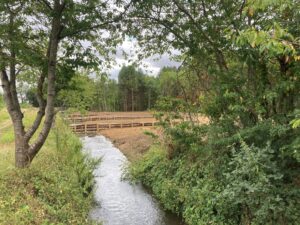
A range of Natural Flood Management measures have been installed along Pix Brook at Etonbury Woods, helping to hold more water within the landscape during periods of heavy rainfall and reduce flood risk downstream. These include:
- leaky barriers: slowing the flow of water through the Pix Brook
- riverbank reshaping: replacing steep edges with more gradual slopes
- tree management: removing diseased or unsuitable trees and replacing with species better suited to wet woodlands.
Further information is available via the link below:
Etonbury Woods Natural Flood Management project briefing note
Monitoring
We’ll monitor the river closely to see how our interventions slow the flow of the water and influence water quality.
A combination of technical experts and our river volunteers will create a monitoring network to look at the flow patterns of the Pix Brook. This network will improve our knowledge around the influence of extreme weather and local flows on the catchment.
All of this information will be shared and used to forecast potential flooding, helping to create a more resilient community.